Tax season arrives and your CPA asks for your QuickBooks file, Profit & Loss, Balance Sheet, or other financial records.
But there is an important question to ask before handing over the books:
Are they actually ready?
QuickBooks can generate a Profit & Loss or Balance Sheet at any time. That doesn’t necessarily mean the information behind those reports is accurate, complete, or properly organized.
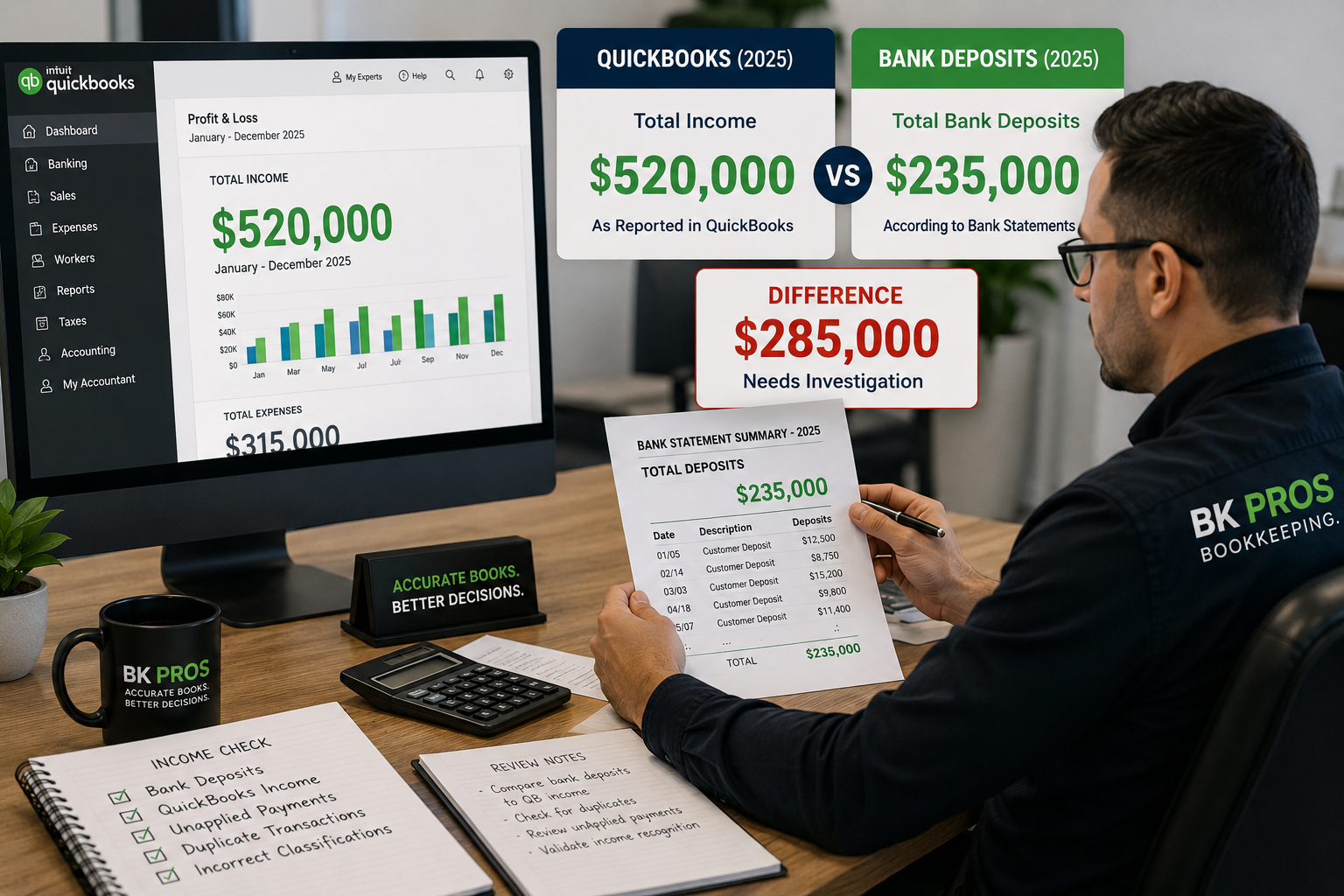
Unreconciled accounts, duplicate transactions, unusual balances, incorrectly categorized activity, and unresolved Accounts Receivable or Accounts Payable can all affect the financial information your CPA receives.
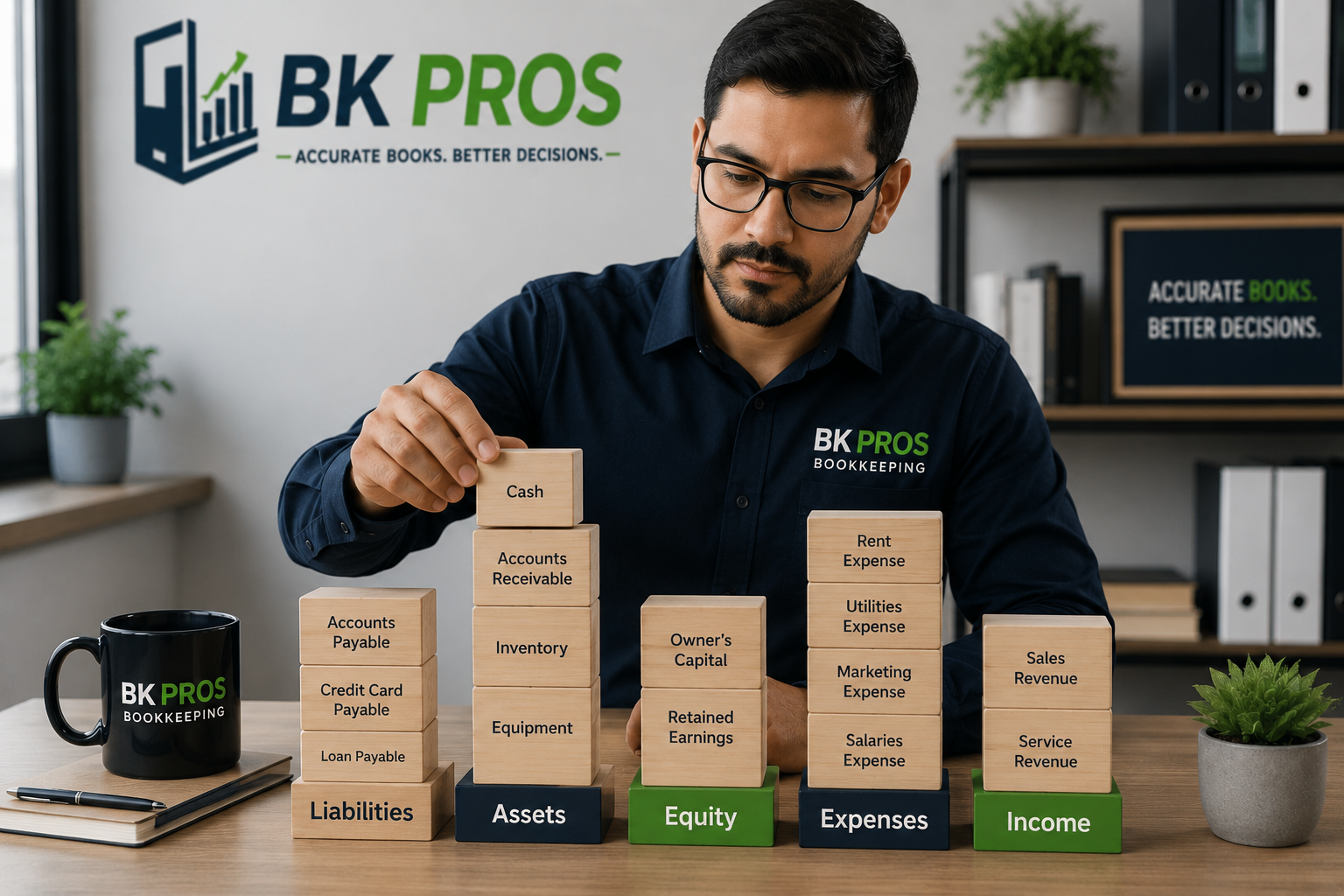
Preparing your books for your CPA isn’t just about generating reports. It’s about making sure the transactions behind those reports have been properly recorded and reviewed.
1. Are Your Bank and Credit Card Accounts Reconciled?
One of the first areas to review is reconciliation.
Your bank and credit card accounts should generally be reconciled against the corresponding statements through the period being provided to your CPA.
Reconciliation can help identify:
- Missing transactions
- Duplicate transactions
- Incorrect amounts
- Transactions recorded in the wrong account
- Changes to previously reconciled activity
- Unexplained differences
If QuickBooks shows $55,000 in a checking account while the underlying bank activity supports a significantly different balance, that discrepancy should be investigated before assuming the books are ready.
A reconciliation doesn’t guarantee that every transaction was categorized correctly, but it provides an important level of verification that the activity recorded in QuickBooks corresponds with the financial institution’s records.
2. Does Your Profit & Loss Make Sense?
Don’t just generate the Profit & Loss.
Review it.
Compare the results with what you know about the business.
Ask questions such as:
- Does the income look reasonable?
- Are expenses significantly higher or lower than expected?
- Are there negative balances that don’t make sense?
- Is Unapplied Cash Payment Income appearing?
- Are there unusually large amounts in miscellaneous or uncategorized accounts?
- Are personal or owner transactions mixed with operating expenses?
- Are loan proceeds incorrectly appearing as income?
An unusual balance doesn’t automatically mean something is wrong.
But it may tell you where additional review is needed.
3. Review the Balance Sheet Too
The Profit & Loss often gets most of the attention, but the Balance Sheet is equally important.
Review accounts such as:
- Bank Accounts — Do the balances make sense?
- Accounts Receivable — Do customers really owe the amounts shown?
- Accounts Payable — Are those vendor balances still outstanding?
- Credit Cards — Have the accounts been reconciled?
- Loans — Do the balances reasonably reflect what the company still owes?
- Assets — Are vehicles, equipment, and other assets recorded appropriately?
- Equity — Are owner contributions and distributions being classified consistently?
Old or unusual balances on the Balance Sheet can reveal bookkeeping problems that may not be obvious from the Profit & Loss alone.
4. Look for Duplicate Transactions
Duplicate transactions can enter QuickBooks in several ways.
A transaction may already exist in QuickBooks and later arrive through the bank feed.
If the bank transaction is added instead of appropriately matched to the existing transaction, QuickBooks may contain the activity twice.
Bank accounts that are disconnected and later reconnected can also require careful review of downloaded activity.
Duplicates can affect:
- Income
- Expenses
- Bank balances
- Customer activity
- Vendor activity
- Financial reports
Before sending your books to your CPA, significant duplicate activity should be investigated.
5. Review Accounts Receivable and Accounts Payable
If your company uses invoices and bills, take a close look at Accounts Receivable and Accounts Payable.
Accounts Receivable
Ask:
Do customers really owe these amounts?
An invoice from several years ago may still appear outstanding even though the customer actually paid it.
The payment may have been recorded incorrectly, duplicated, or never properly applied to the invoice.
Accounts Payable
Similarly:
Do you really still owe these vendors?
Old bills can remain open because payments were recorded incorrectly or because historical bookkeeping wasn’t properly maintained.
Your CPA should receive financial records that reflect the company’s actual outstanding balances as accurately as possible.
6. Make Sure Loans Aren't Recorded as Income
When a company receives loan proceeds, money enters the bank account.
That doesn’t automatically make the deposit income.
For example:
Bank Loan Received: $50,000
The company receives $50,000 in cash, but it also generally creates a $50,000 liability that must be repaid.
If the deposit is incorrectly categorized as income, the Profit & Loss may overstate the company’s revenue.
Loan payments also require attention because a payment can include both principal and interest, which may need different accounting treatment.
7. Separate Owner Activity From Business Operations
Money moving between the owner and the company shouldn’t automatically be classified as income or expense.
Depending on the circumstances and business structure, transactions may represent:
- Owner contributions
- Owner draws or distributions
- Reimbursements
- Personal expenses paid by the business
- Business expenses paid personally by the owner
These transactions should be identified and categorized appropriately rather than mixed indiscriminately with normal operating income and expenses.
8. Review Uncategorized and Suspense-Type Accounts
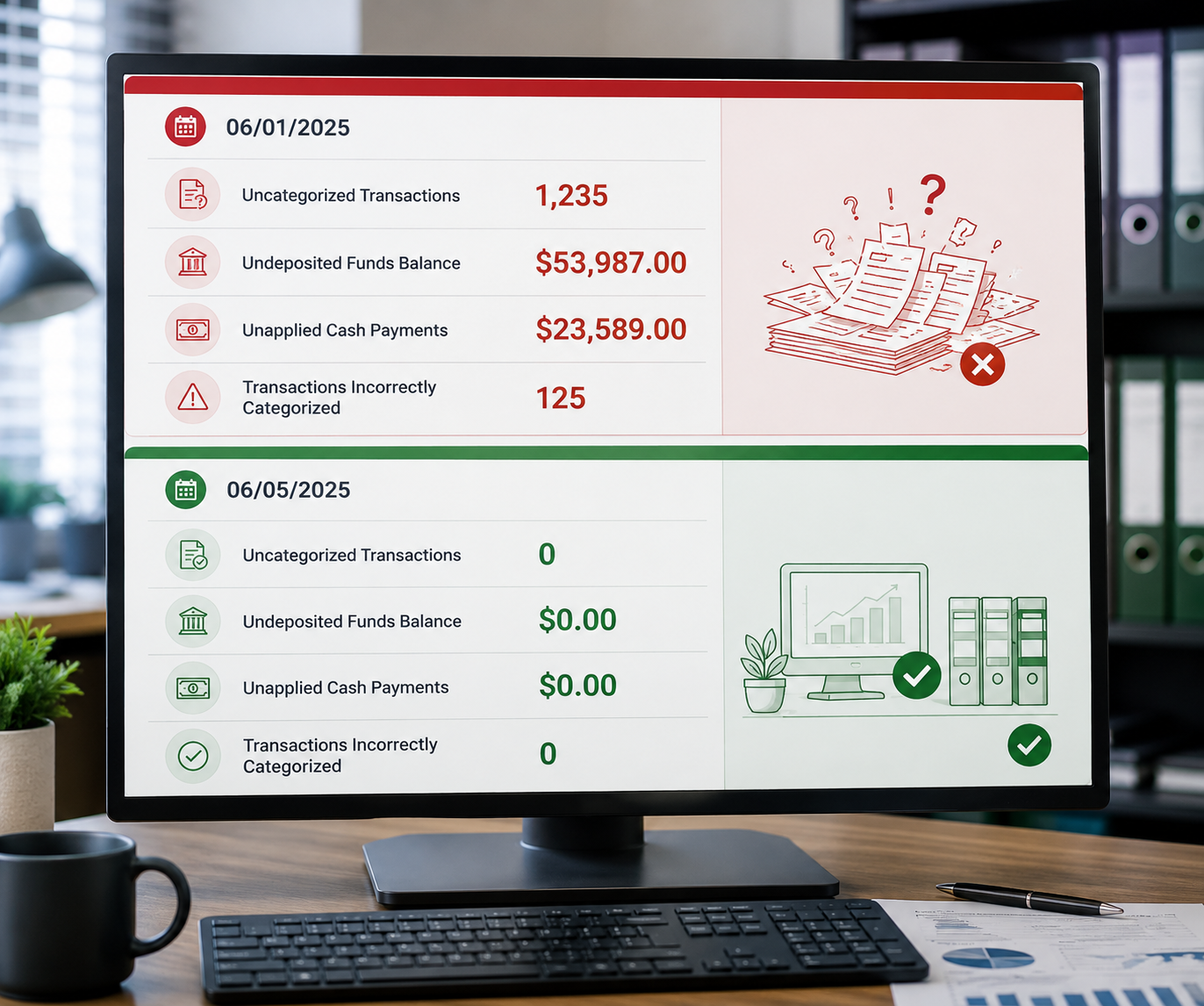
Before providing the books to your CPA, look for accounts containing transactions that haven’t been fully resolved.
Depending on the QuickBooks file, you may encounter items in accounts such as:
- Uncategorized Income
- Uncategorized Expense
- Ask My Accountant
- Unapplied Cash Payment Income
- Unapplied Cash Bill Payment Expense
- Other temporary or unusual accounts
The presence of these accounts doesn’t automatically mean the books are incorrect.
But significant balances may indicate transactions that require additional investigation.
Your CPA Shouldn't Have to Rebuild Your Bookkeeping
Your CPA or tax professional may provide tax preparation, tax planning, accounting, advisory, or other professional services.
Bookkeeping serves a different—but complementary—purpose.
A bookkeeper helps maintain the underlying financial records by recording transactions, reconciling accounts, reviewing balances, and organizing the books.
When those records are properly maintained, your CPA has cleaner and more organized financial information to work from.
That can make the handoff between bookkeeping and tax preparation much smoother.
Don't Wait Until Tax Season to Discover the Problem
Many bookkeeping problems accumulate gradually.
One duplicate transaction may not seem significant.
One unreconciled month may not seem urgent.
One incorrectly categorized deposit may go unnoticed.
But after twelve months—or several years—those issues can become much more difficult to investigate.
Regular bookkeeping and reconciliation can help identify problems while the transactions are still recent and easier to research.
Is Your QuickBooks File Ready for Your CPA?
Before handing over your books, BK PROS can review your QuickBooks file for signs of:
- Reconciliation problems
- Duplicate transactions
- Unusual account balances
- Accounts Receivable or Accounts Payable issues
- Incorrectly classified transactions
- Unapplied payments
- Disorganized Chart of Accounts
- Other bookkeeping discrepancies
Not sure whether your books are ready for your CPA?
Get Your Books Reviewed.